
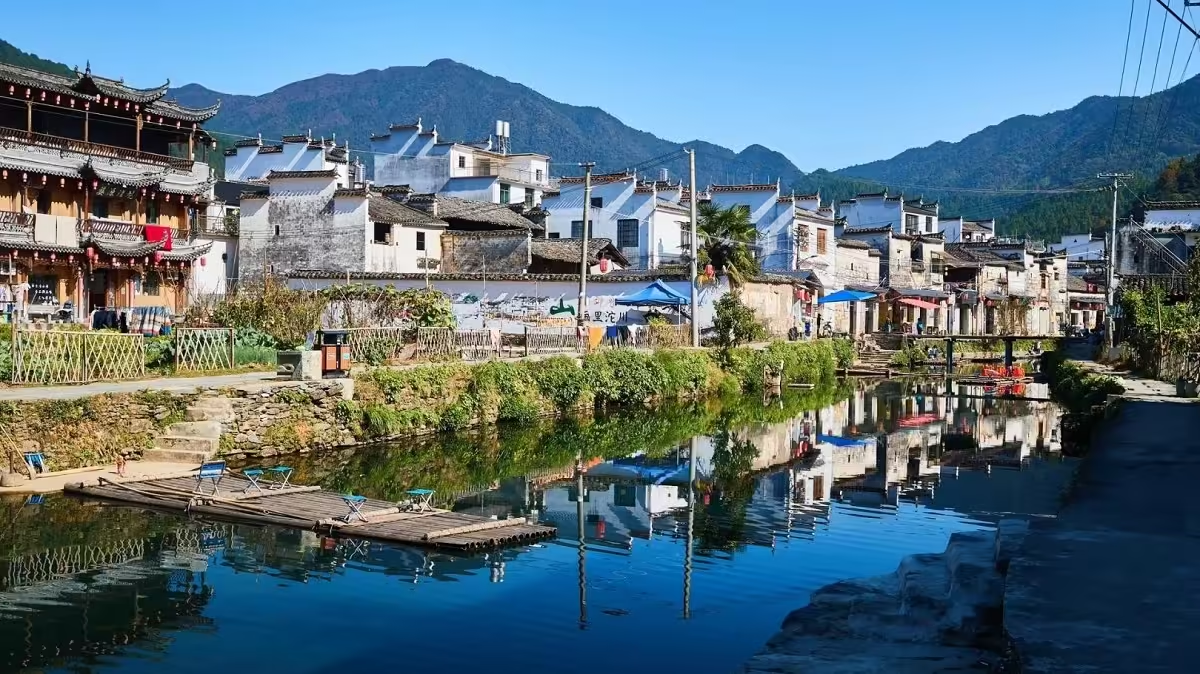
The Northern Route of Wuyuan is the essence of the region, known for its rich cultural history and literary connections. For centuries, it has been a gathering place for scholars and poets, showcasing a deep cultural atmosphere. This route features a captivating blend of scenic landscapes, ancient caves, stone forests, and the charm of old villages with ancient trees and bridges. It primarily offers visitors an authentic experience of Ming and Qing dynasty villages and idyllic countryside scenery, making it a budget-friendly option for young travelers and backpackers.
Along this route, you can explore major attractions such as the 4A-rated Dazhang Mountain Wolong Valley, Lingyan National Forest Park, the historic village of Likeng, Sixiyan Village (the first village of Huizhou merchants), and the famous Rainbow Bridge, known as China’s most beautiful covered bridge. You can also visit the filming location of Sparkling Red Star and enjoy river drifting activities. The harmony between the village architecture and the natural environment is breathtaking, with the landscapes and waterscapes complementing each other perfectly, creating a picturesque scene that leaves a lasting impression.
Travel Information about the Northern Route of Wuyuan
Tickets and Opening Hours
| Attraction | Ticket Price | Opening Hours |
|---|---|---|
| Sixiyan Village | 55 yuan | 7:30 AM – 6:00 PM |
| Likeng Village | 60 yuan | 8:00 AM – 6:00 PM |
| Rainbow Bridge | 60 yuan | 7:30 AM – 6:00 PM |
| Lingyan Cave | 55 yuan | 7:30 AM – 6:00 PM |
| Dazhang Mountain | 55 yuan | 7:30 AM – 6:00 PM |
| Shicheng | 3 yuan (includes a water purchase code) | 7:30 AM – 6:00 PM |
Best Time to Visit
When visiting Wuyuan, remember this phrase: “For mountains, go north; for water, go east.” The Northern Route is the best option for autumn trips to Wuyuan, especially for viewing the vibrant fall foliage.
Transportation to Scenic Areas
Location:
- Sixiyan Village is located in Sikou Town.
- Rainbow Bridge is in the Rainbow Bridge Tourist Area in Qinghua Town.
- Lingyan Cave is in Gutang Township along the Northern Route.
- Dazhang Mountain Wolong Valley is located in Zhangshan Township.
- Likeng Village is in Tuochuan Township.
- Congxi Rafting is in Congxi Village, Qiukou Town.
- Zheyuan is in Sikou Town.
- Shicheng is in Dazhang Mountain Township.
Transportation: You can take a high-speed train to Wuyuan and then transfer to shuttle buses that service various scenic spots along the Northern Route.
Highlights of the Northern Route of Wuyuan
Sixiyan Village
Sixiyan Village (思溪延村) was founded during the fifth year of the Southern Song Dynasty’s Qingyuan era (1199), boasting over 800 years of history. The village is characterized by its well-preserved Ming and Qing dynasty architecture. Nestled against lush green hills, its paths are paved with blue stone slabs, and a clear river winds through the village, creating a tranquil and ancient atmosphere.
One of the most famous buildings in the village is Liaozhai House, which has stood for over 300 years. The house is adorned with yellowed calligraphy scrolls and plaques, and it has served as the filming location for various TV dramas, such as Liaozhai and Blue and White Porcelain. Today, it has been transformed into a restaurant, offering meals for visitors.
The overall style of Sixiyan Village is simple and elegant. Its whitewashed walls and small, orderly windows create a harmonious contrast, reflecting the traditional Chinese philosophy of “Tao follows nature.” The intricate horse-head eaves of the buildings form a beautiful silhouette against the open sky, enhancing the rhythm and layering of the space.
Transportation: To visit, you can take a bus from Wuyuan New Bus Station to Sikou, which takes about 45 minutes. After getting off, it’s a 5-minute walk to Yancun. From Yancun, Sixi Village is only about 500 meters away, accessible by a picturesque stone-paved path through the fields.
Rainbow Bridge
Rainbow Bridge (彩虹桥) is considered a masterpiece of Wuyuan’s covered bridges and is often referred to as the most beautiful covered bridge in China. Its name is inspired by a Tang Dynasty poem that describes “two waters reflecting a clear mirror, with twin bridges resembling a rainbow.” Covered bridges like this one are not only visually stunning but also practical, providing shelter from the rain and a place for people to rest.
Built during the Southern Song Dynasty, Rainbow Bridge has stood for over 800 years. It spans 140 meters and consists of six pavilions and five corridors, forming a long pedestrian bridge. Each pavilion sits on a pier, while the span between the piers forms a corridor, giving the bridge the alternative name of “Pavilion Bridge.” From a distance, the pavilions appear slightly higher than the corridors, creating a harmonious and staggered architectural rhythm. Each section of the bridge—whether pavilion or corridor—functions independently, meaning that damage to one part won’t affect the entire structure, a testament to the scientific and thoughtful design.
The bridge’s piers are the most exquisite part, showcasing a simple yet heavy artistic style. Surrounded by picturesque scenery, with towering green mountains in the distance and clear waters nearby, it is a perfect place to pause, rest, and take in the beauty of Wuyuan.
Origin of the Name “Rainbow Bridge”
The name “Rainbow Bridge” comes from a heartwarming story. Two locals from Qinghua Village, a monk named Hu Jixiang and an expert named Hu Yongban, were determined to build a permanent bridge for the people of Qinghua. Hu Jixiang traveled far and wide for over three years, collecting donations, while Hu Yongban, a water conservancy and bridge expert, took charge of the design and construction. After more than four years of hard work, the bridge was finally nearing completion.
As the last roof tiles were about to be placed at sunset, a stunning rainbow appeared over the mountains to the west, with the sunset reflecting beautifully on the water. Hu Jixiang and Hu Yongban saw this as an auspicious sign and immediately asked the villagers to celebrate with firecrackers. They decided to name the bridge “Rainbow Bridge” in honor of this special moment. To commemorate these two ancestors, a monument was erected in the central pavilion, ensuring their contribution would be remembered for generations.
Transportation: Rainbow Bridge is located just west of Qinghua Town. From Wuyuan County, minibuses run to Qinghua every 30 minutes, with a ticket price of 10 yuan. Alternatively, motorcycle taxis are available for around 50 yuan.
Lingyan Cave
Located within Wuyuan’s Lingyan Cave Forest Park (灵岩洞森林公园), the area spans approximately 30 square kilometers and combines natural beauty with cultural landmarks. The park is divided into three main sections: the Lingyan Cave complex, the ancient tree forest of Shicheng, and the ecological tea garden.
Lingyan has been a renowned tourist destination since its development in the late Tang Dynasty and its peak in the Northern Song Dynasty. The main attractions are the impressive cave formations, ancient trees of Shicheng, and the tea garden. The area is known for its unique karst landscapes, with every mountain featuring caves, and every cave offering something extraordinary. The interconnected caves and underground water systems are particularly striking, making it one of the finest examples of volcanic terrain in the middle and lower Yangtze River region.
Accommodation: Located next to Lingyan Cave in the Shicheng Scenic Area of Dazhang Mountain, Shicheng Tongyuan Boutique Homestay (石城通源精品民宿) offers a charming countryside experience. Three thousand-year-old ginkgo trees stand in front of the homestay, with tranquil bamboo forests beside it, providing a stunning view of the entire village. The rooms are equipped with modern amenities such as Wi-Fi, television, air conditioning, 24-hour hot water, and private bathrooms. For those who enjoy rural life, this homestay is a perfect place to rest.
Dining: The Tongyuan Boutique Homestay serves traditional farmhouse dishes, including meals cooked over a wood fire, offering an authentic taste of the countryside. Additionally, Hanxu Renjia inside the scenic area is another great spot to sample fresh, local delicacies, showcasing the unique flavors of farm-to-table cooking.
Entertainment: The Lingyan Lake Water Park provides various water activities for visitors. With its picturesque lakeside scenery, it’s a great place to enjoy the natural beauty of the area. The park also offers camping sites for outdoor enthusiasts, making it a perfect spot for those who love nature and outdoor adventures.
Dazhang Mountain Wolong Valley
Also known as “Three Emperors’ Barrier,” Dazhang Mountain (大鄣山) lies on the border between Anhui and Jiangxi provinces and serves as the northern natural barrier of Wuyuan. As part of the Yellow Mountain range, the open section of Dazhang Mountain includes Wolong Valley (卧龙谷), a pristine alpine gorge that retains its original, untouched beauty. This valley is famously described as a hidden paradise in the works of the renowned martial arts novelist Jin Yong.
Wolong Valley is also the watershed between the Poyang Lake system’s Le’an River and the Qiantang River system’s Xin’an River. Surrounded by towering peaks and lush forests, the area boasts a forest coverage of 90.7%. Clear mountain springs cascade through the granite rocks, forming deep pools and colorful ponds after thousands of years of erosion. The valley is adorned with verdant trees, striking rock formations, and spectacular waterfalls that resemble a silver river descending from the heavens. The “sunrise” and “sea of clouds” are among the most breathtaking natural sights in the valley.
Accommodation: Wuyuan Dazhang Mountain Resort (婺源大鄣山度假农庄) is located at the foot of the mountain, just 1.5 kilometers from Wolong Valley. It is the only comprehensive facility offering both dining and lodging in the area. The rooms are clean and well-maintained, featuring spacious bathrooms, color TVs, and air conditioning, making it an ideal place to escape the summer heat.
Likeng Village
Likeng (理坑) is a renowned historical and cultural village located in Tuochuan Township, about 56 kilometers from Wuyuan County. The village dates back to the late Northern Song Dynasty and is deeply rooted in Confucianism, with its residents historically known for their dedication to scholarship and respect for the teachings of Zhu Xi, a prominent Confucian philosopher. Due to its cultural richness, Likeng has been praised by scholars as a “source of Neo-Confucianism.”
The village is home to well-preserved Huizhou-style architecture, including several remarkable ancient buildings such as the “Official Residence” of Yu Ziyi, Governor of Guangzhou during the Ming Dynasty’s Chongzhen reign, and “Shangshu Mansion” of Yu Maoxue, Minister of Works during the Wanli reign. Additionally, there is the “Sima Residence” of Yu Weishu, a magistrate during the Qing Dynasty’s Shunzhi reign, and the “Yiyutang” of tea merchant Yu Xianhui during the Daoguang reign. Other notable structures include the garden-style “Yunxi Villa,” the pavilion-style “Flower Hall,” and the legendary “Jinjia Well.”
These white-walled, black-tiled buildings showcase exquisite craftsmanship, making Likeng a living museum of architectural art. The homes are designed to remain cool in summer and warm in winter, highlighting their practicality alongside their beauty.
Transportation:There is no direct bus from Wuyuan County to Likeng, but you can take a bus to Tuochuan and walk about 1 kilometer to reach the village.Alternatively, you can take a bus from Wuyuan County to Qinghua Town, where there are limited minibuses and local farm trucks that head to Likeng after 8:30 AM, with a travel time of about 40 minutes.
Congxi River Rafting
Congxi River Rafting (丛溪漂流) is located in Congxi Village, Qiukou Town, within Wuyuan County. The rafting experience covers a total distance of 4.5 kilometers and takes approximately 1.5 hours, offering a thrilling and exciting adventure. This location is also the only outdoor filming site for the famous movie and TV series The Sparkling Red Star.
Nestled in the embrace of mountains and rivers, Congxi Village is often shrouded in mist, creating a cool and refreshing atmosphere. Along the rafting journey, visitors can enjoy stunning sights such as the Plum Blossom Beach, known for its blooming plum trees; Yuanyang Pool, where mandarin ducks swim playfully; Egret Beach, where egrets gracefully glide over the water; and Ox Horn Bay, shaped like a bull’s horn. The picturesque scene of lush mountains, crystal-clear waters, blooming wildflowers, and local farmers working in the fields creates a breathtaking countryside landscape, making visitors feel as if they’ve entered a paradise on earth.
Accommodation: Congxi Manor, located within the Congxi River Rafting Scenic Area, is a top-tier rural tourism resort developed by Wuyuan Congxi Rafting Tourism Development Co., Ltd. The first phase of the manor includes 160 high-end and mid-range guest rooms. The Congxi Restaurant can serve up to 350 diners at a time, and there is also a multi-functional conference hall that can accommodate more than 500 people.
Shicheng Maple Leaves
Shicheng (石城) in Wuyuan is a paradise for photographers, renowned for its stunning maple leaves. Every year, from mid to late November, the leaves turn a vibrant red, resembling the fiery hues of a sunset. This breathtaking display enhances the beauty of the ancient Huizhou village, characterized by its black-tiled roofs and white walls. The maple trees in the village tower above, reaching heights of over 35 meters, creating a stunning backdrop against the sky.
During this time, photographers flock to capture the breathtaking scenery, from early morning until dusk. Each moment presents a unique opportunity to appreciate the mesmerizing beauty of the crimson leaves. In the early mornings, the fiery maple trees, shrouded in mist or morning smoke, appear otherworldly, making every click of the shutter a chance to immortalize a piece of paradise.
Transportation: Getting to Shicheng can be a bit challenging, as visitors must take a bus from Wuyuan County to Shicheng Village, passing through Fuchun and Gutan Town along the way.
A Cool Summer Travel Guide to Wuyuan’s Northern Route
4-Day Wuyuan Northern Route Itinerary
Day 1: Arrival in Wuyuan County
- Travel: Shenzhen ✈️ Huangshan 🚗 Wuyuan County
- Stay: Wuyuan County town hotel
I arrived in Wuyuan County at 10 PM and went straight to my hotel to rest, preparing for the adventures ahead.
Day 2: Dazhang Mountain Wolong Valley (大鄣山卧龙谷) and Zhangshan Village (鄣山村)
- Travel: Wuyuan County 🚗 Wolong Valley 🚗 Zhangshan Village
- Stay: Zhangshan Xiaozhu guesthouse
The day began with a 50-minute drive to Dazhang Mountain Wolong Valley. Parking was convenient, and the scenic area greeted us with temperatures around 25°C, a refreshing escape from the summer heat. The clear, shallow waters of the valley were irresistible – perfect for splashing around. Be prepared for wet clothes after hiking and playing in the water.
After a fun morning, we drove another 30 minutes to Zhangshan Village. The narrow mountain roads required some cautious driving, but the peaceful village made it worthwhile. With its serene atmosphere and rustic charm, Zhangshan Village offered an authentic rural experience.
Tips:
- Wear sandals for water play.
- Bring a change of clothes.
Day 3: Explore Zhangshan Village (鄣山村)
Zhangshan Village is a hidden gem tucked away in the mountains. Its traditional lifestyle is a stark contrast to urban life. Each household has a fish pond, and the villagers use the crystal-clear mountain water for daily activities. What amazed me most was the cleanliness of the village—livestock such as chickens, ducks, and dogs are all kept in enclosures, a practice followed for decades.
The village offers a homestay package for just 160 RMB per person per day on weekdays (180 RMB on weekends), including three meals. The value and authenticity of this experience are unmatched, especially during the summer holidays.
Day 4: Gutang Lingyan Cave (古坦灵岩洞), Jujing Village (菊径村), and Return to Wuyuan County
- Travel: Zhangshan Village 🚗 Lingyan Cave 🚗 Jujing Village 🚗 Wuyuan County
Our first stop was Gutang Lingyan Cave, a natural “icebox” where the temperature drops significantly. Inside the cave, water is just a few degrees cold, and visitors might need a jacket despite the summer heat. The cave features inscriptions from various dynasties, including the Tang, Song, Yuan, Ming, and Qing. Among the carvings, I was particularly impressed by the words “岳飞游此 Yue Fei Traveled Here” left by the legendary general Yue Fei. It’s awe-inspiring to imagine ancient scholars exploring such a remote and stunning cave.
Next, we visited Jujing Village, an almost circular Hui-style village visible from an ancient trail overlooking the area. The quiet lanes and lack of commercial activity made for a serene stroll. The village was devoid of crowds, allowing us to soak in the tranquility and traditional charm of this hidden gem.
Tips:
- Bring a light jacket for the cave visit.
Travel Tips for Wuyuan’s Northern Route
- Transportation Options: For non-drivers, buses from Wuyuan’s old North Station (县城老北站) can take you to major spots like Wolong Valley for just a few RMB. However, self-driving is the best way to explore Wuyuan’s lesser-known villages and enjoy the journey at your own pace.
- Road Conditions: Wuyuan’s roads are well-maintained and relatively wide, making it easy to drive. Public facilities, including restrooms, are clean and accessible.
- Avoiding Crowds: To escape overly commercialized attractions, opt for self-driving and explore the free-entry villages along the way. These hidden gems offer stunning scenery and a more relaxed experience.
- Value for Money: Wuyuan’s northern route features older, lesser-known attractions, offering excellent value for money. With fewer tourists, this route is perfect for a peaceful summer vacation.