
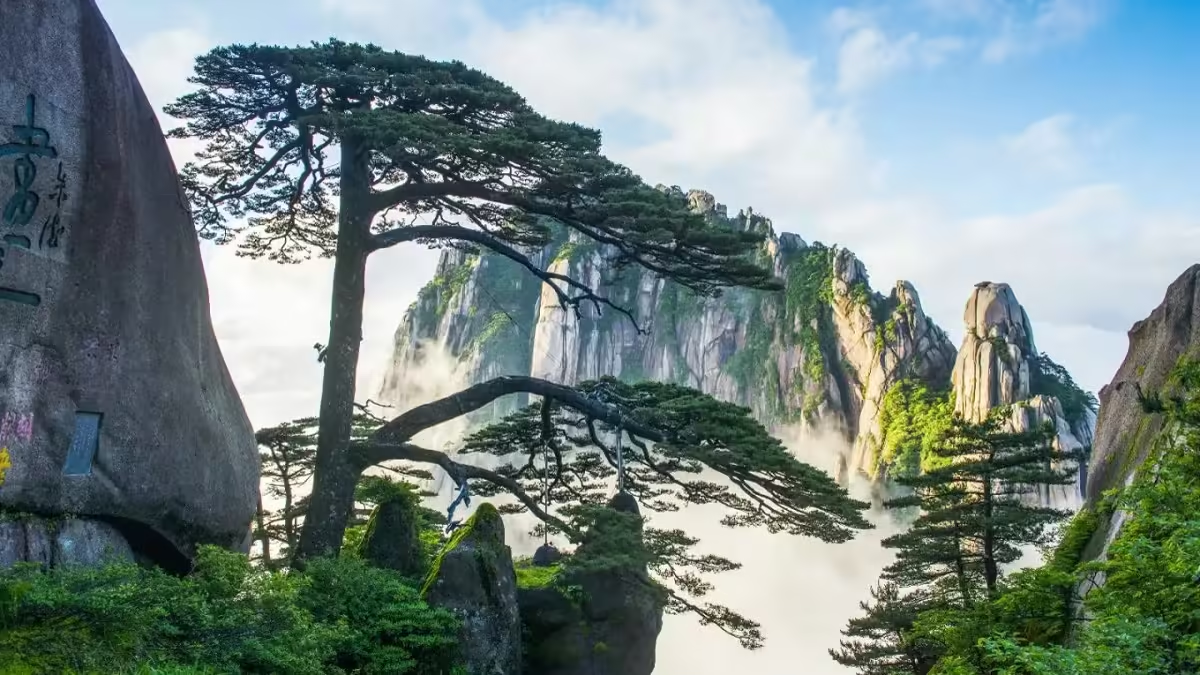
Huangshan Mountain, originally named Yishan, got its name from the dark green rocks on the mountain that appear bluish from a distance. During the Tang Dynasty, it was renamed “Huangshan” because Emperor Xuanzong, a devout Taoist, believed it was where the legendary Yellow Emperor once practiced alchemy. The Huangshan Scenic Area spans Shexian, Xiuning, Yixian, Huangshan District, and Huizhou District, representing the essence of the “500-mile Huangshan.”
The beauty of Huangshan lies in its diverse and changing landscapes. Under the bright sun, it exudes a majestic and masculine beauty; shrouded in mist, it reveals an ethereal elegance. In spring, the mountains are covered in vibrant flowers, while in winter, they are draped in a pure white snow. The picturesque scenery of Huangshan is unmatched by any other mountain in China. From its steep cliffs to the ancient pines standing tall, visitors feel transported back in time, captivated by the serene beauty.
The Huangshan Scenic Area is divided into several key areas: Yuping, Diaoqiao, Beihai, Songgu, Yungu, Hot Spring, and the Xihai Grand Canyon.
Travel Information about Huangshan Mountain Scenic Area
Tickets and Opening Hours
Tickets: Peak season: ¥190; Off-season: ¥150.
Opening Hours:
- March to October: Monday to Friday, 6:20 AM – 5:30 PM; Saturday, Sunday, and holidays, 6:00 AM – 5:30 PM.
- November to March: 7:20 AM – 4:30 PM, including weekends and holidays.
Best Time to Visit
Huangshan is beautiful year-round. In late spring (April), the flowers bloom, while late summer to early autumn (July) offers clear skies ideal for watching sunrises and sunsets. The winter months (December to February) showcase unforgettable snow-covered landscapes, with discounted off-season ticket prices. Note that from December to March, Tiandu Peak and the Xihai Grand Canyon are closed for maintenance.
How to Get to Huangshan Mountain
Train Stations Near Huangshan Mountain
Huangshan has two major high-speed train stations: Huangshan North Station (黄山北站) and Huangshan West Station (黄山西站). Both stations provide access to the scenic area, but each is closer to a different entrance. Huangshan West Station (黄山西站) is closer to the North Gate (北门) of Huangshan, while Huangshan North Station (黄山北站) is closer to the South Gate (南门). Depending on your travel plans, either station can serve as a convenient starting point for your journey to the mountain.
Choosing Your Entrance to the Scenic Area
The scenic area is positioned between these two stations, making both options viable for entry. If your itinerary includes visiting the northern side of the mountain, Huangshan West Station (黄山西站) is a better choice. However, if you plan to explore the southern routes, Huangshan North Station (黄山北站) is more convenient. Ensure to choose the station that best fits your travel route.
Arriving at Huangshan North Station (黄山北站)
If you arrive at Huangshan North Station (黄山北站) in the morning, you can head directly to the Huangshan Scenic Area (黄山风景区) by taking a bus from the station. Bus tickets can be purchased at the exit of the high-speed rail station. The bus journey to the scenic area takes approximately 50 minutes. For travelers arriving in the afternoon or evening, it’s recommended to stay overnight in the nearby Tunxi Old Street (屯溪老街) area and head to the scenic area the following day.
There are also bus services from Huangshan West Station (黄山西站) to the scenic area’s South Gate (南门), North Gate (北门), and West Gate (西门). These buses run from 8:00 AM to 4:00 PM, with exact schedules available on the official website of the scenic area.
Traveling from Tunxi Old Street (屯溪老街) to Huangshan Scenic Area (黄山风景区)
From Tunxi Old Street (屯溪老街), you can take a bus or taxi to the scenic area. Buses can be booked in advance via the “Huangshan Chuxing (黄山出行)” WeChat mini-program. This allows travelers to choose their pick-up and drop-off points, offering convenience and flexibility. Once you book a seat, the driver will contact you with details on where to meet. These buses operate like shared shuttles, with a fare of 60 RMB per person for a round trip, and the journey takes about 40 minutes. Upon arrival, the bus drops passengers at the New Guoxian Transfer Center (新国线换乘中心).
Transfer Centers at the Scenic Area
The scenic area has two key transfer centers: the New Guoxian Transfer Center (新国线换乘中心) at the South Gate (南门) and the Xiaoyaoxi Transfer Center (逍遥溪换乘中心), which is closer to the entrance of the scenic area. Buses heading to various parts of the scenic area make stops at both transfer points. From these centers, you can purchase a 19 RMB bus ticket to either the Yuping Cable Car (玉屏索道) or Yungu Cable Car (云谷索道) stations to begin your ascent.
For convenience, it’s worth noting that additional stops have been added for the descent, including near popular guesthouses at Tangkou Bridge (汤口大桥) and Tangkou Ridge (汤口岭).
Bus Services and Schedules
Several bus routes connect Huangshan North Station (黄山北站) with different points of interest, making it easy to travel to and from the scenic area:
- Hongcun Village (宏村) to Huangshan North Station (黄山北站): 30 RMB per person
Departure times: 08:30, 09:30, 10:30, 11:30, 12:30, 12:50, 13:30, 14:30, 15:15, 15:55, 16:30, 17:00, 17:30. - Huangshan North Station (黄山北站) to South Gate (南门): 30 RMB per person
Departure times: 07:40, 08:10, 09:00, 09:30, 10:00, 10:30, 10:46, 11:00, 11:30, 12:00, 12:20, 12:40, 13:00, 13:20, 13:40, 14:00, 14:30, 14:50, 15:00, 15:20, 15:40, 15:50, 16:10, 16:30, 16:50, 17:10, 17:30, 17:50, 18:20, 18:40, 19:00. - Huangshan North Station (黄山北站) to North Gate (北门): 36 RMB per person
Departure time: 12:40 daily. - Huangshan North Station (黄山北站) to Hongcun (宏村)/Xidi Villages (西递): 30 RMB per person
Buses pass through Qi Yun Mountain (齐云山), Xidi Village (西递), Guiyuan (归园), Pingshan (屏山), and Xiuli (秀里).
Departure times: 08:55, 09:35, 10:35, 11:05, 11:35, 12:35, 13:05, 13:35, 14:05, 14:35, 15:35, 17:05. - Hongcun Village (宏村) to South Gate (南门): 15 RMB per person
Departure times: 06:20, 06:50, 07:20, 07:50, 08:20, 09:00, 09:40, 10:20, 11:00, 11:40, 12:20, 13:00, 13:30, 14:00, 14:30, 15:00, 15:30, 16:00, 16:30, 17:00, 17:30.
Transportation within Huangshan Mountain Scenic Area
The scenic area offers several cable car options for visitors, including the Taiping Cable Car, Yuping Cable Car, Yungu Cable Car, and the Xihai Grand Canyon Sightseeing Cable Car.
- The Taiping Cable Car starts at Songlin Peak and ends at Songgu Temple.
- The Yuping Cable Car is located in the core area of Huangshan, running from Guanpu Pavilion to Putuan Pine, connecting the Hot Spring and Yuping Scenic Areas.
- The Yungu Cable Car runs from Yungu Temple to White Goose Ridge.
- Additionally, the Xihai Grand Canyon Sightseeing Cable Car and sedan chair services throughout the scenic area offer added convenience and unique experiences for visitors.
Ticket prices for the cable cars vary by season:
- Yungu and Taiping Cable Cars: 65 RMB for a one-way trip during the off-season, 80 RMB during the peak season.
- Yuping Cable Car: 75 RMB for a one-way trip during the off-season, 90 RMB during the peak season.
- Xihai Grand Canyon Sightseeing Cable Car: 80 RMB during the off-season, 100 RMB during the peak season.
Attraction Rating
- Cultural Significance: ★★★
- Unique Features: ★★★★
- Relaxation: ★★★
- Beauty: ★★★★★
- Romance: ★★★
- Adventure: ★★
Map of Huangshan Mountain
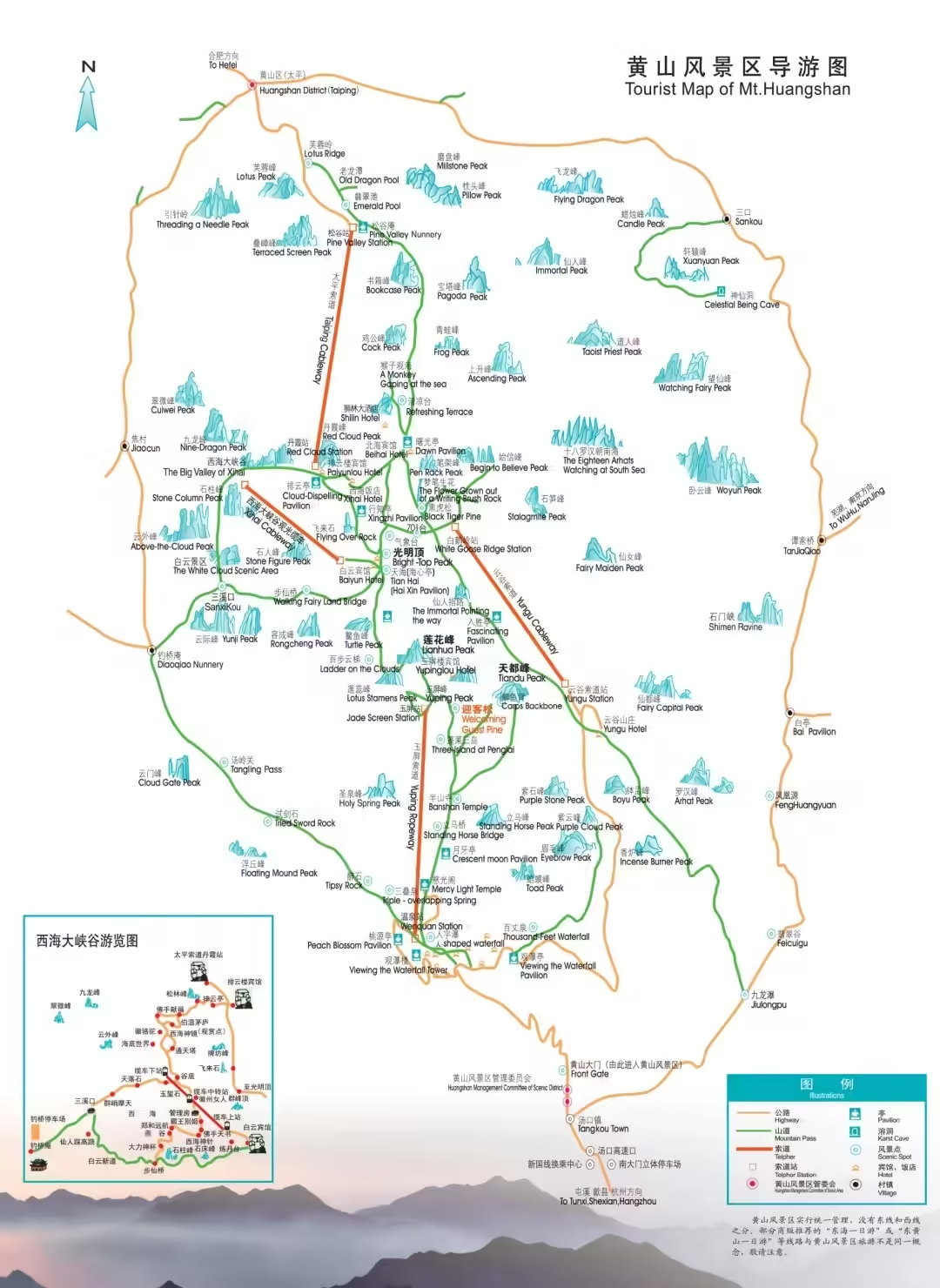
Highlights of Huangshan Mountain Scenic Area
Yuping Scenic Area
Yuping Scenic Area, commonly referred to as the “Front Mountain,” centers around Yuping Tower and includes two main peaks: Lotus Peak and Tiandu Peak. Along the way, visitors can enjoy stunning landscapes such as “The Three Immortal Islands,” “The Hundred-Step Cloud Ladder,” “Thread of Sky,” “New Thread of Sky,” and “Aoyu Cave.”
Yuping Tower: Situated between Tiandu Peak and Lotus Peak, it is known as one of the most scenic spots in Huangshan. The famous Welcome Pine stands tall on its left, while the Farewell Pine is on its right. In front of the tower are the Guest Pine and Wenshu Platform, and behind it lies Yuping Peak, where the renowned “Reclining Buddha” rock formation can be found. Tiandu Peak, to the south of Yuping Peak, is one of the three main peaks of Huangshan, renowned for its steepness, with an elevation of about 1,830 meters. It inspires the feeling of “reaching the sea’s edge, where the sky meets the land, and standing atop the peak, I am the summit.”
Lotus Peak: Located north of Yuping Tower, it is the highest peak in Huangshan at an elevation of about 1,864.8 meters. From Lotus Peak, you can descend past the Turtle and Snake Rocks and the Hundred-Step Cloud Ladder, cross Aoyu Cave, and reach Aoyu Peak at an altitude of 1,780 meters. Below Aoyu Peak is Tianhai, home to a high-altitude botanical garden that features many rare plant species. Nearby attractions include the Sea-Heart Pavilion and the Phoenix Pine.
Cuiwei Peak: Located in the northwest part of Huangshan, this solitary peak is one of the 36 major peaks of the mountain, standing at approximately 1,589 meters. The peak is covered with dense pine forests and features the historic Cuiwei Temple at its base, which was built during the Tang Dynasty by the monk Mai Yi.
Diaoqiao Scenic Area
Located in the western part of Huangshan, the Diaoqiao Scenic Area stretches from the Diaoqiao Nunnery inside the western gate of Huangshan, along Baiyun Stream, past Shiren Peak, Shizhu Peak, and Shichuang Peak, all the way to Zhonghai Pavilion in Tianhai. The area covers around 16.55 million square meters, with an elevation difference of over 1,000 meters.
At the heart of the area is Diaoqiao Nunnery, also known as Baiyun Nunnery. Originally a Taoist temple before the Ming Dynasty, it was converted into a Buddhist nunnery during the Kangxi period of the Qing Dynasty. The area is peaceful and secluded, surrounded by layers of peaks, unique pine trees growing from rocks, and the constant sound of flowing water. Visitors can pass Diaoqiao Nunnery and the Bashful Spring to reach Jiulong Peak, Paiyun Pavilion, and Sanhekou, where three streams converge. Also known as the “Three Streams Bridge,” this spot features a breathtaking waterfall with a 140-meter drop, the highest in Huangshan, which flows year-round without freezing. Here, visitors can also witness the extraordinary natural phenomenon known as “The Immortal Walking on Stilts.”
Beihai Scenic Area
Located in the heart of Huangshan, Beihai Scenic Area is surrounded by other scenic regions: Yun Gu to the east, Yuping to the south, Diaoqiao to the west, and Songgu to the north. Nestled between Bright Summit, Gongyang Mountain, White Goose Ridge, and Shixin Peak, it sits at an elevation of around 1,600 meters. Known for its towering peaks, unique rock formations, valleys, terraces, pines, and cloud spectacles, Beihai is celebrated for its grandeur, wonder, steepness, and illusionary beauty.
Notable sights in Beihai include Lion Peak, Cooling Terrace, Monkey Gazing at the Sea, Immortal Carrying a Treasure on His Back, Brush Pen Peak, Flying Stone, and the Eighteen Arhats Paying Homage to the South Sea. Lion Peak, at an altitude of around 1,690 meters, lies at the heart of the area, and Cooling Terrace is one of the best spots to view the sea of clouds and sunrises. Shixin Peak, with its steep cliffs and sharp angles, offers breathtaking views both near and far, giving rise to the famous saying, “Once you visit Shixin Peak, you believe Huangshan is truly the most extraordinary mountain.”
Beihai is a major high-altitude scenic zone and tourist reception area in Huangshan, with four main climbing routes:
- The southern route from the Hot Spring, via Ciguang Pavilion, Yuping Tower, and Tianhai, to Beihai (with the Yuping Cableway).
- The western route from Jiaocun, via Diaoqiao and Tianhai, to Beihai.
- The eastern route from Kuzhu Stream, via Yungu Temple, to White Goose Ridge and Beihai (with the Yungu Cableway).
- The northern route from Furong Ridge, via Songgu Nunnery and Eighteen Bends, to Beihai (with the Taiping Cableway).
Songgu Scenic Area
Located on the northern slope of Huangshan, Songgu Scenic Area is known as the “North Gate of Huangshan” and represents the serene beauty of the mountain’s back side in the saying, “The front is steep, the back is graceful.” This area encompasses the valleys between Lion Peak, Camel Peak, Bookcase Peak, and Pagoda Peak, stretching over 12.5 kilometers.
With an elevation difference of 1,100 meters and more than 6,500 stone steps, Songgu offers spectacular scenery with thousands of peaks and valleys, unique rock formations, and famous pools and springs at every turn. The valley is lush and green year-round, with ancient pines and bamboo hidden among its forests. Its water features – pools, springs, and waterfalls – contribute to Songgu’s distinctive landscape. Scattered throughout the valley are ancient buildings like Furong Residence and Songgu Zen Forest, which offer visitors a sense of the peaceful and elegant spirit of the valley.
Major attractions in this refreshing area include Furong Ridge, Emerald Pool, and Wulong Pond. Songgu Nunnery, located under Diezhang Peak, is surrounded by stone carvings and exudes a serene atmosphere. From Songgu Nunnery, visitors can head toward Cooling Terrace in Beihai, passing three pavilions along the way – First Pavilion, Second Pavilion, and Third Pavilion – each located at an altitude of over 1,000 meters. The main attractions along the route are unique rock formations such as Immortal Gazing at the Sea, Immortal Paving the Road, Tiger Carrying a Sheep, and Guan Yu Blocking Cao Cao, which draw many visitors.
Yungu Scenic Area
Located on the eastern side of Huangshan, Yungu Scenic Area sits at an elevation of just 890 meters, making it a relatively lower and more open valley. This area was once known as Chengxiangyuan, named after Song Dynasty Chancellor Cheng Yuanfeng, who studied there. In the Ming Dynasty, scholar Fu Yan renamed the local temple to Yungu Temple after writing the characters “云谷” (Cloud Valley) for a monk. Over time, Yungu Temple became the name of the entire area. Major attractions here include Yungu Lodge, ancient trees, unusual rock formations, and the Nine Dragons Waterfall and Hundred Zhang Spring.
Yungu Temple: Nestled between Arhat Peak and Incense Burner Peak, this area is known for its overlapping mountains, winding valleys, and the constant rise and fall of mist. In front of the temple lies the Lingxi Spring, and nearby are two famous ancient trees, a rare pine and an iron fir. Though the original temple no longer exists, a hotel now stands on the site, providing a rest stop for hikers climbing the eastern route. From here, visitors can admire the ever-changing clouds and enjoy the renowned Huangshan Maofeng tea. The area also features a cable car and the Yungu Lodge for accommodation.
Nine Dragons Waterfall: Originating from Tiandu, Yuping, Liandan, and Xianzhang Peaks, the waterfall cascades down between Arhat Peak and Incense Burner Peak in nine distinct layers, with each layer forming a pool, known as Nine Dragons Pool. An ancient verse praises it as “a flying waterfall rivalling Kuanglu’s, with sheer cliffs supporting the sky and hanging the Nine Dragons.”
Hundred Zhang Waterfall: Also known as Hundred Zhang Spring, this waterfall plunges down the sheer cliffs between Qingtan and Ziyun Peaks, creating an impressive spectacle. A pavilion called Guangpu Pavilion is built near the Hundred Zhang Platform, offering visitors a prime spot to admire the waterfall.
Hot Springs Scenic Area
The Hot Springs Scenic Area of Huangshan, once known as the Paradise of Immortals, is famous for its rejuvenating springs, one of the four wonders of Huangshan. Historically referred to as Tangquan and Zhushaquan, the springs have two outlets. According to the Huangshan Annals from the Song Dynasty, Emperor Xuanyuan Huangdi bathed here, restoring his youth and vitality, which gave the springs their reputation as the Sacred Spring. Major attractions in this area include the Renzi Waterfall, Three-Tier Spring, Mingxuan Spring, Danjing Well, Drunken Stone, and Ciguang Pavilion.
Huangshan Hot Springs: Located on the northern bank of Tangquan Stream, at the southern base of Zishi Peak, the hot springs sit at an elevation of 650 meters. The main spring has an average temperature of 42.5°C, while the secondary spring averages 41.1°C, with the temperature fluctuating based on the weather. Modern facilities in the area include individual hot spring baths and swimming pools, providing a perfect spot for visitors to relax and recover after hiking.
Renzi Waterfall: Formerly known as Feiyu Spring, this waterfall is located between Zishi and Zhusha Peaks, at an elevation of about 660 meters. The waterfall splits into two streams that intersect at a 26-degree angle, resembling the Chinese character “人” (ren). The waterfall is about 50 meters long, resembling two white dragons racing down the cliffs, creating a thunderous sound that echoes through the valley. In the middle of the waterfall, stone steps from the Ming Dynasty allow visitors to ascend as if they were climbing to heaven, earning the path the name Luohan Steps. The best view of the waterfall is from the Guanpu Tower on Peach Blossom Peak.
Ciguang Pavilion: Originally a temple known as Zhushaan, it was built during the Jiajing period of the Ming Dynasty. Later renamed Fahai Zen Temple by the monk Pumen, its fame grew and even reached the imperial court, earning the name Huguo Ciguang Temple by imperial decree in 1610. Today, it serves as the starting point for the Yuping Cable Car and the entrance to the front mountain of Huangshan.
Related Details:
Generally, visitors to Huangshan arrive by car at this point, which now serves as one of the main tourist reception centers for Huangshan. The scenic area is centered around Lansheng Bridge, with Peach Blossom Stream and Xiaoyao Stream running through it. The central elevation is around 650 meters. Key hotels in the area include the Baiyun Hotel and the Hot Spring Resort Hotel.
From here, the road distance to the Ciguang Pavilion (the traditional front mountain climbing entrance) is 1,500 meters, which takes about 25 minutes to walk. To reach the back mountain entrance at Yungu Temple, the road distance is 7 kilometers, and several shuttle buses are available to take visitors there.
Xihai Grand Canyon Scenic Area
To connect the Baiyun Scenic Area, Songgu Scenic Area, and Beihai Scenic Area, the management of Huangshan developed a new scenic area – Xihai Grand Canyon. This area is known as one of the most picturesque and deep sections of the Huangshan Scenic Area and is often referred to as the Dreamland Scenic Area.
Xihai Grand Canyon lies among the peaks of Xihai, under Danxia Peak. It stretches from Paiyun Pavilion in the north to Diao Bridge An and Buxian Bridge in the Baiyun Scenic Area in the south, covering a total length of about 3,600 meters and an area of 25 square kilometers. The canyon forms a U-shape, with a maximum elevation drop of 400 meters. Surrounded by towering peaks such as Shizhu Peak and Shichuang Peak in the south and Paiyun Pavilion, Songlin Peak, and Feilai Stone to the east, Xihai Grand Canyon is an ideal place for tourists to admire the majesty, uniqueness, steepness, and seclusion of Huangshan.
Paiyun Pavilion: Known as the Exhibition Hall of Strange Rocks, this is the best spot to view the peculiar rock formations and sunset of Huangshan. It also offers excellent views of cloud seas, evening glow, and the mysterious peaks and valleys. Nearby attractions include rock formations like Immortal Sunbathing Boots, Immortal Drying Shoes, Fairy Embroidery, and the well-known Broken Stone Pine, which is over 150 years old and listed as a World Heritage item.
Baiyun Stream: Originating from the deep valley below Paiyun Pavilion, this stream collects water from numerous peaks such as Shizhu, Aoyu, Yunji, and Jiulong Peaks, flowing for about 13 kilometers. The stream joins Yunmen Creek near Diao Bridge An. Along its course are a series of deep pools, including the largest, Double Dragon Pool, and the narrow yet deep Shayu Pool, both offering captivating sights.
Bright Summit (Guangming Ding): As the second-highest peak of Huangshan, rising to about 1,860 meters, the summit is open and spacious, named for its long exposure to sunlight. A meteorological station—the highest in eastern China—stands on the former site of a temple, offering a panoramic view.
Danxia Peak: With an elevation of about 1,664 meters, the red hue of the peak’s cliffs, illuminated by the setting sun, gives this peak its name. Below Danxia Peak lies Hongshuiyuan, which flows into Danxia Stream, and nearby stone formations like Damo Facing the Wall and White Horse Carrying Scriptures fascinate visitors. Two paths lead up the peak, where both the sunrise and sunset can be observed.
Yunmen Peak: Located in the southwest section of Xihai Grand Canyon, south of Shizhu Peak, Yunmen Peak neighbors Yunji Peak and Fuqiu Peak, with an elevation of approximately 1,645 meters. The cliffs of Yunmen Peak part like a gate, standing tall and separated by a narrow pass where only clouds seem to flow through, earning its name “Yunmen Peak” (Cloud Gate Peak). Due to its shape resembling a pair of scissors, it is also known as Scissor Peak. Notable rock formations on this peak include the Liren Stone and Lion and Tiger Fighting for Food.
Fuqiu Peak: Located in the southern part of Xihai Grand Canyon, southeast of Yunmen Peak, Fuqiu Peak rises to about 1,683 meters. According to legend, Fuqiu Peak was a favorite place for an immortal named Fuqiu Gong to enjoy leisurely activities, giving the peak its name. At its summit, there is Fuqiu Immortal Altar, and further down the slope are the ruins of Fuqiu Temple and Fuqiu Pavilion (which was destroyed during the Tang Dynasty’s Zhonghe reign). At the foot of the mountain lies Fuqiu Spring (also known as Wuyun Spring), which feeds into Fuqiu Stream (or “Fu Stream”) and flows southward into Caogong Stream. Fuqiu Peak is also known by other names, including Jiaoding Peak and colloquially as Ruomaojian. However, it is a different mountain from the Jiaoding Peak found on the Songgu Path.
Vairous Itineraries to Explore Huangshan Mountain Scenic Area
Two-Day Itinerary: Enjoy the Sunset and Sunrise
Who Is This Itinerary For?
- Travelers who want to explore more of Huangshan’s attractions in one visit
- Those who want to see both the sunrise and sunset
- Visitors with a sufficient budget for an overnight stay on the mountain
- Anyone looking for a slower-paced hike with breaks
Why Choose a Two-Day, One-Night Trip?
- You get to witness both sunrise and sunset, along with stargazing opportunities
- More time to visit additional scenic spots across Huangshan
- (Most importantly) This itinerary is less physically demanding! You can take a midday break to rest and recharge, continue exploring in the afternoon, and avoid the rush of queuing for the cable car at the end of the day. You’ll also skip the peak-hour crowds.
Itinerary Overview
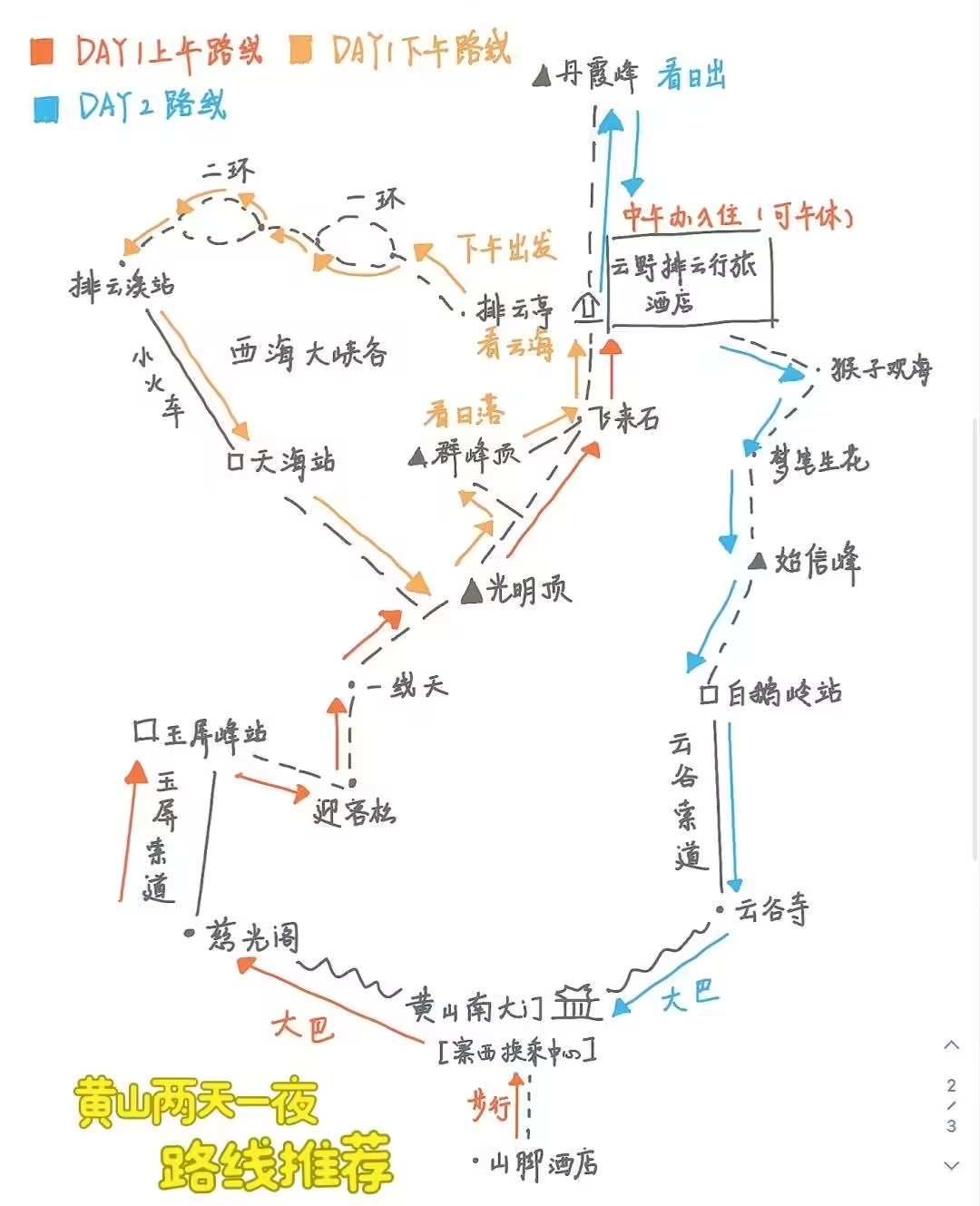
Day 0 (Evening Before):
Stay at a hotel at the foot of Huangshan, preferably within walking distance of the shuttle transfer center. This will allow you to get an early start the next morning and avoid crowds.
Day 1 – Morning:
- Take the Yungu Cable Car (玉屏索道) to ascend the mountain
- Visit the Guest-Greeting Pine (迎客松)
- Walk through One-Line Sky (一线天)
- Hike to Bright Summit (光明顶)
- Continue to Flying Rock (飞来石)
- Head to Paiyun Pavilion (排云亭)
- Check in at Paiyun Lodge Hotel (排云型旅酒店)
You should reach the hotel before noon. After a break and lunch, you can continue your hike in the afternoon.
Day 1 – Afternoon:
- Start with a walk to Paiyun Pavilion (排云亭)
- Explore the First and Second Rings of Xihai Grand Canyon (西海大峡谷一环二环)
- Take the Xihai Train (西海大峡谷小火车) back up
- Hike to the Summit of Qunfeng Peak (群峰顶) to enjoy the sunset
- Return to the hotel for an overnight stay
Day 2 – Morning:
- Watch the sunrise at Danxia Peak (丹霞峰)
- Return to the hotel for breakfast and a short nap
- Visit Monkey Watching the Sea (猴子观海)
- Explore Pen Rack Peak (梦笔生花)
- Hike to Beginning-to-Believe Peak (始信峰)
- Take the Yun Gu Cable Car (云谷索道) back down
If you move at a fast pace, you can finish the hike and descend by noon.
Why Choose to Ascend via the Front Mountain and Descend via the Back Mountain?
The front mountain has many concentrated scenic spots, making it ideal for the first day when you have more time. It also helps to descend from the back on the second day to avoid peak crowds around noon.
This plan balances difficulty: the front mountain is steep, while the back mountain is more gentle. On the first day, you’ll be more energetic, and with the hotel stay offering a midday rest, you’ll avoid feeling exhausted.
Best Routes for One-Day Tour to Huangshan Mountain
1. Back Mountain Up, Front Mountain Down (Popular Route)
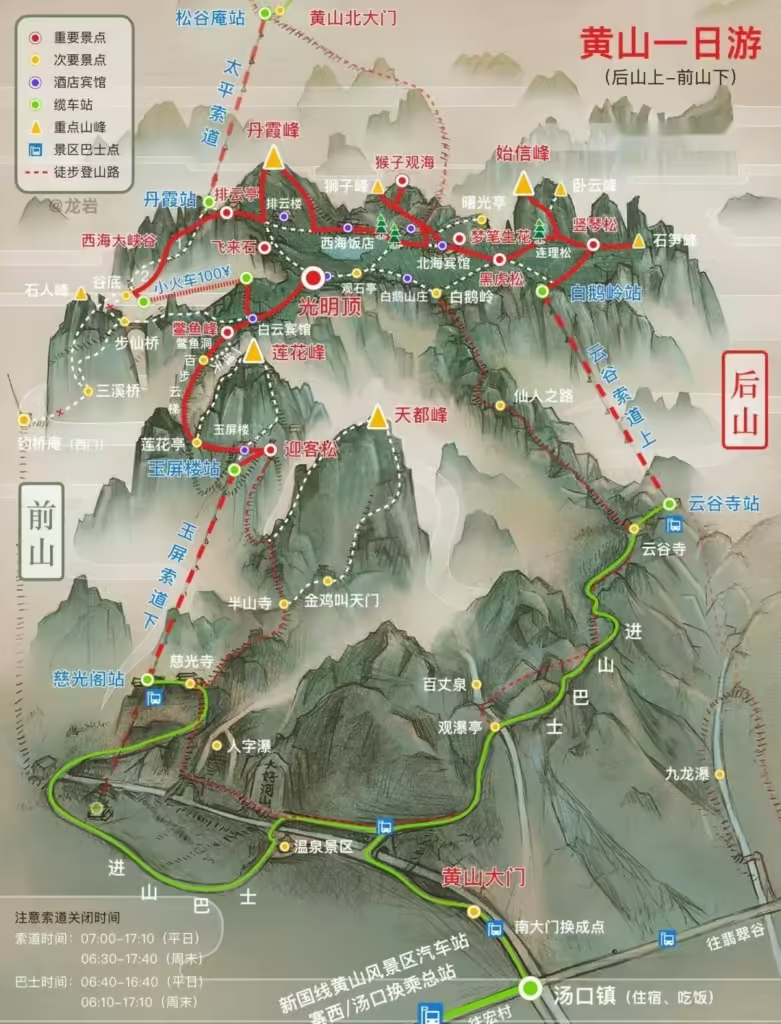
Route: Yun Gu Cable Car (云谷索道) → White Goose Ridge (白鹅岭) → Stone Bamboo Shoot Peak (石笋峰) → Beginning-to-Believe Peak (始信峰) → Pen Rack Peak (梦笔生花) → Monkey Watching the Sea (猴子观海) → Lion Peak (狮子峰) → Danxia Peak (丹霞峰) → Paiyun Pavilion (排云亭) → Xihai Grand Canyon (西海大峡谷) → Bright Summit (光明顶) → Fish Peak (鳌鱼峰) → Hundred Steps Ladder (百步云梯) → Guest-Greeting Pine (迎客松) → Jade Screen Cable Car (玉屏索道)
Why Choose It: This route is ideal for those who want to explore the Xihai Grand Canyon (西海大峡谷). It involves more downhill walking, making it slightly easier on the knees. Plus, it covers many of Huangshan’s most iconic spots like the Guest-Greeting Pine (迎客松) and Bright Summit (光明顶).
2. Front Mountain Up, Back Mountain Down (Classic Route)
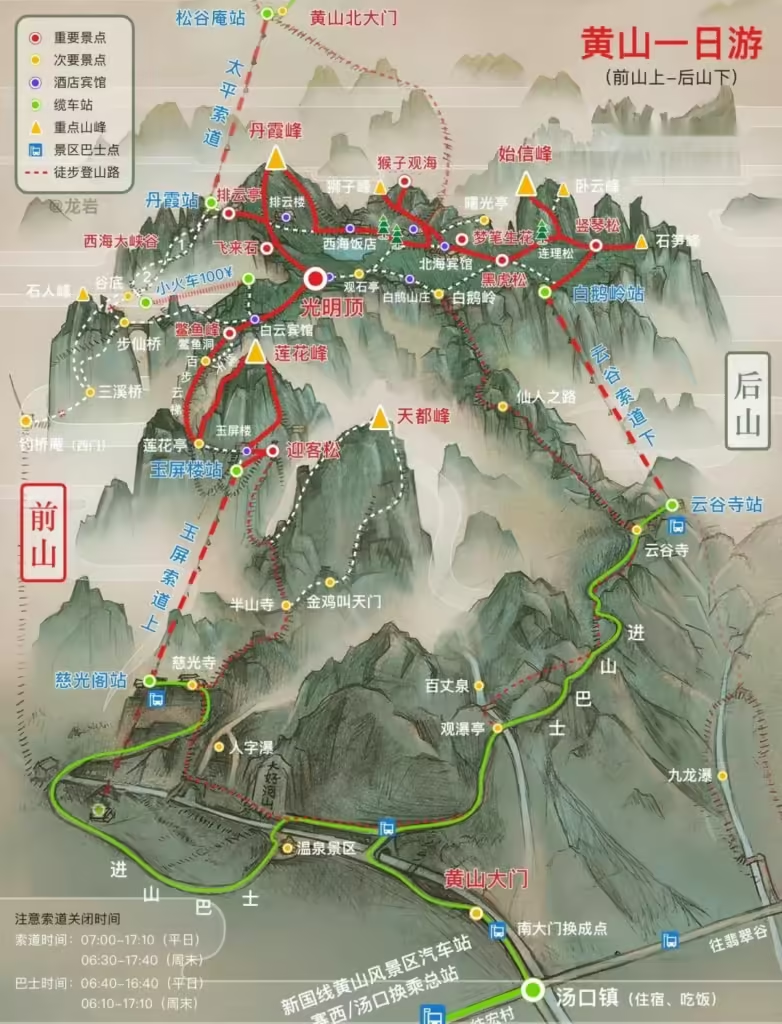
Route: Jade Screen Cable Car (玉屏索道) → Guest-Greeting Pine (迎客松) → Lotus Peak (莲花峰) → Hundred Steps Ladder (百步云梯) → Fish Peak (鳌鱼峰) → Bright Summit (光明顶) → Flying Rock (飞来石) → Paiyun Pavilion (排云亭) → Danxia Peak (丹霞峰) → Lion Peak (狮子峰) → Monkey Watching the Sea (猴子观海) → Pen Rack Peak (梦笔生花) → Beginning-to-Believe Peak (始信峰) → Stone Bamboo Shoot Peak (石笋峰) → White Goose Ridge (白鹅岭) → Yun Gu Cable Car (云谷索道)
Why Choose It: This is the classic route and best for those who want to visit Lotus Peak (莲花峰). However, be prepared for more uphill climbing as you ascend Lotus Peak. You’ll pass through many famous landmarks and have an amazing view of Huangshan’s unique rock formations and cliffs.
Important Tips for Your Visit
- On the Mountain:
- Choose Wisely Between Xihai Grand Canyon and Lotus Peak: During peak season, you’ll only have time for one of these attractions. If the weather is bad, opt for the Xihai Grand Canyon (西海大峡谷), as fog tends to obscure the views from Lotus Peak (莲花峰). The mist in Xihai, however, can add to its mystique and charm.
- Seasonal Closures: In December, both Lotus Peak (莲花峰) and Xihai Grand Canyon (西海大峡谷) are usually closed, with reopening expected in March. Tian Du Peak (天都峰) is another great spot to look forward to in spring.
- West Sea Train: If you want to ride the Xihai Train (西海小火车), sit in the front row to get the best view of the Grand Canyon below. It’s an incredible sight!
- Prepare for Unpredictable Weather: The weather on Huangshan changes rapidly, so be prepared and maintain a relaxed mindset. Each moment, whether clear or foggy, is part of the magic of Huangshan.
- At the Base:
- Getting Into the Scenic Area: Both the New National Line bus station (新国线) and the South Gate offer buses that take you into the scenic area. Most hotels provide free shuttle service to and from the New National Line station.
- Luggage Storage: There are self-service lockers at the New National Line station for 15 yuan per day. This is great if you don’t want to carry heavy bags while hiking.
- Ticket Validity: Huangshan’s entrance tickets are valid for three days, allowing you to enter the park twice within that period if needed.
- What to Pack: Bring snacks and water with you, but avoid bringing instant noodles, as there’s no way to boil water at the top. Before heading up the mountain, purchase disposable hiking poles, gloves , and a raincoat. Wear athletic shoes, and don’t forget a portable charger and a windbreaker.
A Relaxed One-Day Itinerary for Huangshan Mountain
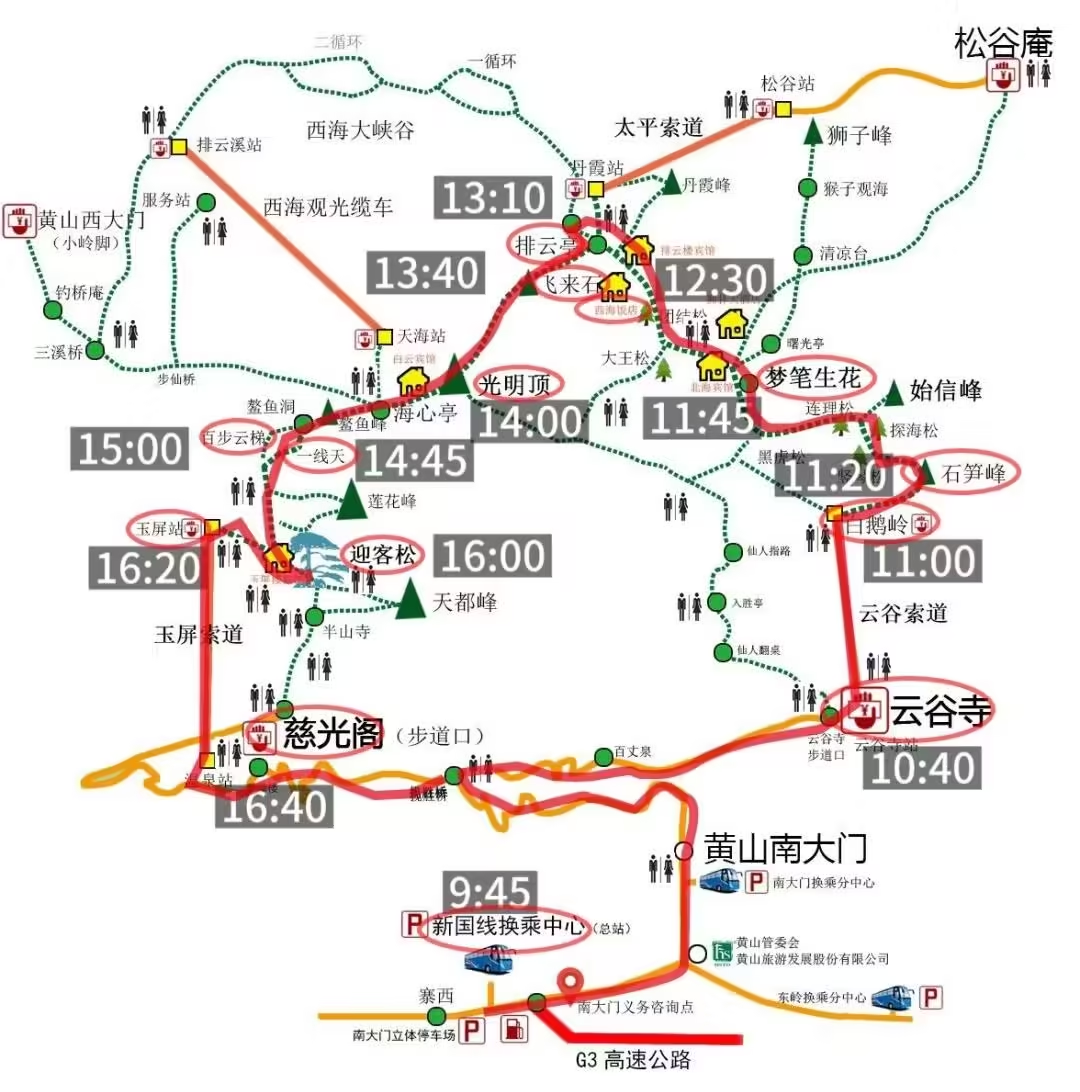
Arriving at Huangshan Mountain
- 9:45 AM: Arrive at the New National Line Transfer Center in Tangkou Town (汤口镇新国线换乘中心) and purchase your bus ticket for ¥19.
- 10:00 AM: Board the bus to the mountain, heading to the Yun Gu Temple (云谷寺).
- 10:40 AM: Take the Yun Gu Cableway (云谷索道) to ascend the mountain. Be sure to buy your entrance tickets and round-trip cable car tickets online in advance for ¥360.
- 11:00 AM: Arrive at Bai E Ridge (白鹅岭) and officially start your hike.
Sightseeing Highlights
- 11:15 AM: Get a distant view of the “Immortal Gathering Herbs” (仙人采药) scene.
- 11:20 AM: Encounter a troop of monkeys near Shishun Peak (石笋峰). Remember to keep your distance and avoid feeding them for safety.
- 11:45 AM: Marvel at the “Dream Pen Creates Flowers” (梦笔生花).
- 12:30 PM: Take a break at the West Sea Hotel (西海饭店) for lunch. Boxed meals range from ¥45-55 and are decent, with options like hamburgers and buns available.
Continuing the Journey
- 1:00 PM: Continue your hike.
- 1:10 PM: Reach Paiyun Pavilion (排云亭) for a stunning view of the West Sea Grand Canyon (西海大峡谷). Here, you may encounter other hikers from the front side asking how much further they have to go. If you’re short on time, just remember there’s always a next time!
- 1:40 PM: Visit the famous Feilai Stone (飞来石) for some photos. Be aware that while it’s a popular spot, if the crowd is too big, you might consider skipping the line since Huangshan has so many beautiful sights everywhere.
- 2:00 PM: Arrive at Guangming Peak (光明顶) for a restroom break.
- 2:45 PM: Experience the “Sky-Opening Gap” (一线天).
Final Stretch
- 3:00 PM: Tackle the Hundred Steps Cloud Ladder (百步云梯), a section that can be a bit tiring. Take your time and be careful as you ascend; there’s a resting area at the top where you can enjoy the breeze.
- 4:00 PM: Spot the iconic Welcome Pine (迎客松) shortly after descending the Hundred Steps Cloud Ladder. The walk to get up close is not too strenuous and well worth it.
- 4:20 PM: Take the Yu Ping Cableway (玉屏索道) back down the mountain.
- 4:40 PM: Board the bus back to Tangkou Town at the New National Line (新国线). Don’t forget to purchase your return ticket for ¥19.
Night Hiking Itinerary for Huangshan Mountain
Key Timing for the Hike
If you’re planning to hike Huangshan (黄山) at night, the latest time to start your journey is 4:00 PM from the South Gate bus terminal (南门客运点). Missing this deadline will likely result in not being able to enter the mountain. Unlike Mount Emei (峨眉山), where enforcement is more lenient, Huangshan’s ticket checkpoints close strictly at 5:30 PM. If you don’t reach the checkpoint at the base of the mountain by this time, you will be unable to proceed.
- 4:10 PM: Depart from your hotel at the South Gate (南大门).
- 4:10 – 5:10 PM: Take the bus from the South Gate to the ticket office at the foot of the mountain.
- 5:10 PM: Arrive at the ticket office, exit the bus, and begin the hike.
- 5:35 PM: Reach the mountain checkpoint. The checkpoint closes at 5:40 PM, so ensure you arrive before this time to avoid being turned away.
Essential Supplies for Night Hiking
- Clothing: Bring a short-sleeve shirt, long sleeves, and long pants. It’s crucial that your outer layer is windproof. The wind is extremely strong on the mountain at night, and wearing breathable fabrics without wind protection will leave you feeling cold.
- Hat and Gloves: A warm hat is essential for keeping yourself comfortable during the colder hours.
- Flashlight: A reliable headlamp or handheld flashlight is a must to navigate safely in the dark.
- Power Bank: Ensure your phone and flashlight stay charged throughout the hike by bringing a fully charged power bank.
- Heat Packs: Carry hand warmers or heat packs to keep yourself warm, especially if you plan to rest outdoors.
- Thermal Blanket: A thermal (emergency) blanket will help keep you warm if you decide to sleep near the summit. Many hikers use these to wrap themselves up while waiting for the sunrise.
Along the Way: Supply Points
- Be sure to stock up on food and drinks before you leave the South Gate (南大门). From there to the mountain checkpoint, there are no stores available for purchasing provisions.
- If you begin your hike around 5:30 PM, all shops below the Halfway Temple (半山寺) will likely be closed, meaning no supply points will be available.
- Halfway Temple (半山寺): This spot has a security booth with a public restroom where you can purchase instant noodles for RMB 15 and Red Bull for RMB 15. The helpful guard will even prepare the noodles for you! I ate two bowls here and grabbed a bottle of water before continuing my ascent.
- From Halfway Temple (半山寺) to Bright Summit (光明顶), there are no other supply points. Once you reach Bright Summit, food and drinks are available, but they are expensive. After Bright Summit, I didn’t encounter any more shops.
Visitor Guide for Huangshan Mountain Scenic Area
Accommodation Options
Staying at Tangkou Town or Mountaintop
If your plan is to explore only Huangshan, staying in Tangkou Town (汤口镇) or at the mountaintop is generally the best option. Tangkou Town is located at the South Gate of Huangshan and serves as a vital access point for both the front mountain (Ciguang Pavilion) and the back mountain (Yungu Temple) entry gates. This makes Tangkou Town an essential stop for visitors heading to Huangshan.
Exploring Nearby Attractions
If you also wish to visit nearby attractions like Hongcun (宏村), Xidi (西递), the ancient town of Huizhou (徽州古城), Tunxi Old Street (屯溪老街), Wuyuan (婺源), Qi Yun Mountain (齐云山), and the Xin’an River (新安江), you may want to choose your accommodations based on your travel itinerary. For instance, if you plan to spend four days exploring Huangshan, a well-balanced arrangement could be one night on the mountain to catch the sunrise and sunset, one night in Hongcun for picturesque morning and evening scenes, and one night in Tunxi to explore the old street and enjoy authentic Huizhou cuisine. This approach is ideal for travelers seeking an immersive experience in diverse landscapes.
Staying in Tunxi District (屯溪区)
For those who prefer not to switch hotels daily, staying in Tunxi District (屯溪区) is a suitable option. Centrally located in Huangshan City, this area boasts a fan-shaped distribution of famous attractions, making transportation very convenient with travel times ranging from 30 to 80 minutes to key sites. Tunxi offers a vibrant nightlife, and the cost of living is relatively low, providing a better dining and lodging experience. By staying on Tunxi Old Street (屯溪老街) or Liyang Old Street (黎阳老街), you can enjoy the beautiful night views of the Xin’an River (新安江) and indulge in various local delicacies just steps away from your accommodation.
10 Hotels on Top of Huangshan Mountain

701 Launch Station Hostel (701发射台招待所)
- Renovated: 2014
- Overview: The rooms are quite old, and the overall cleanliness and facilities are average. Breakfast is simple, and the hostel primarily offers bunk beds in shared rooms, requiring guests to use communal bathrooms.
- Location: About a 20-minute walk to Guangming Peak (光明顶).
- Best Viewing Points:
- Sunrise: Hotel platform
- Sunset: Entrance of Bai E Villa (白鹅山庄)
Bai E Villa (白鹅山庄)
- Renovated: 2013
- Overview: The rooms are dated, but the cleanliness is satisfactory. Bai E Villa offers bunk beds in shared accommodations, making it a cost-effective choice. It has hot water facilities and a drying room. The entrance provides excellent views of Feilai Stone and the sunrises and sunsets.
- Location: About a 20-minute walk to Guangming Peak (光明顶).
- Best Viewing Points:
- Sunrise: Hotel entrance
- Sunset: Hotel entrance
Yupinglou Hotel (玉屏楼宾馆)
- Renovated: 2015
- Overview: This hotel features complete facilities and a strong culinary focus, serving Huizhou cuisine and local specialties. Located next to the iconic Welcome Pine (迎客松), it’s just a 15-minute walk from the Yuping Cableway. Perfect for those looking to reach the summit early.
- Best Viewing Points:
- Sunrise: Lianhua New Path (莲花新道)
- Sunset: Lianhua Pavilion (莲花亭)
Baiyun Hotel (白云宾馆)
- Renovated: 2015
- Overview: Situated in a prime location within Huangshan Scenic Area, this hotel is highly popular and often more expensive. It offers stunning views of the Xihai Grand Canyon, making it one of the largest hotels on the mountain with various room types available.
- Best Viewing Points:
- Sunrise: Guangming Peak (光明顶) – 15 minutes’ walk
- Sunset: Aoyu Peak (鳌鱼峰) – 20 minutes’ walk
Guangming Peak Mountain Lodge (光明顶山庄)
- Renovated: 2015
- Overview: The lodge is clean, though the facilities are basic. However, its location is unbeatable for sunrise and sunset views.
- Best Viewing Points:
- Sunrise: Guangming Peak (光明顶)
- Sunset: Guangming Peak (光明顶)
Xihai Hotel (西海饭店)
- Renovated: 2016
- Overview: The hotel offers stunning views of the West Sea Peaks and is near the entrance to the West Sea Grand Canyon. The hotel has two buildings: the North Building (Xihai Villa, a four-star option) and the South Building (Xihai Hotel, a five-star option).
- Best Viewing Points:
- Sunrise: Danxia Peak (丹霞峰) – 15 minutes’ walk, or Lion Peak (狮子峰) – 30 minutes’ walk
- Sunset: Danxia Peak (丹霞峰)
Paiyun Boutique Hotel (排云型旅酒店)
- Renovated: 2021
- Overview: This hotel is located near the upper station of the Taiping Cableway and the entrance to the West Sea Grand Canyon. It features modern decor and excellent facilities, offering both Chinese-style dining and buffet options, though prices are relatively high. Ideal for families traveling with children.
- Best Viewing Points:
- Sunrise: Danxia Peak (丹霞峰) – 15 minutes’ walk
- Sunset: Danxia Peak (丹霞峰), or Paiyun Pavilion (排云亭) in winter
Yunji Shilin Cliff House (雲亼.狮林崖舍)
- Renovated: 2023
- Overview: This is a luxury option at the top of the mountain. Although it comes at a premium, the quality of service and facilities are exceptional, making it a top choice for those seeking comfort.
Yunji Shuguangli (雲亼.曙光里)
- Renovated: 2019
- Overview: Similar to the Shilin Cliff House, it offers top-notch accommodation and stunning views. While the price may be higher, guests will enjoy unmatched amenities and comfort.
Shilin Hotel (狮林大酒店)
- Renovated: 2014
- Overview: Backed by the famous Lion Peak, the hotel offers a variety of room types, including rooms with private bathrooms and shared accommodations. It also features luxury standard rooms in a cooling villa, albeit at a higher price point.
- Best Viewing Points:
- Sunrise: Qingliang Terrace (清凉台), Shuguang Pavilion (曙光亭), and Monkey Watch Sea (猴子观海) – 10 minutes’ walk
- Sunset: Shixin Peak (始信峰)
Food Options at Huangshan City
The food in Huangshan belongs to the authentic Huizhou cuisine. Known for its cooking methods, Huizhou cuisine excels in techniques such as braising, stewing, steaming, and quick-frying. It emphasizes the use of rich seasonings, strong flavors, and the preservation of natural tastes, often featuring a heavy use of oil and vibrant colors.
In Tangkou Town, along Xixi Street, in Tunxi Old Street, and on Huangshan Mountain, you can find local delicacies. Notable dishes include stinky mandarin fish (臭鳜鱼), tiger-skin tofu (虎皮毛豆腐), tofu mouse (豆腐老鼠), Yipin pot (一品锅), Huizhou round balls (徽州圆子), Huangshan double stones (黄山双石), Huizhou zongzi (徽州裹粽), and drunken crabs from Tunxi (屯溪醉蟹). While the hotels on the mountain offer meals, they tend to be pricier. It’s advisable to buy food and water before heading up; instant noodles and compressed biscuits are particularly practical.
Huangshan’s signature snacks and treats include Tunxi crab shell yellow baked buns (梅干菜烧饼), Jixi tart cakes (绩溪挞课), stone cakes (石头课), Huizhou small steamed buns (徽州小笼包), tea dried tofu (茶干), Huizhou ink pastries (徽墨酥), Ding City pastries (顶市酥), and rose pastries (玫瑰酥), all of which can be found in specialized shops and markets.
Viewing Points at Huangshan Mountain
Best places to watch the sunrise: Qingliang Platform, Shuguang Pavilion, Shishizi Peak, Shixin Peak, Danxia Peak, Guangming Peak, Aoyu Peak, and Yuping Tower.
Best places to watch the sunset: Paiyun Pavilion, Danxia Peak, Feilai Stone, Guangming Peak, and Shizi Peak.
Best places to view the sea of clouds: Yuping Tower for the front sea, Qingliang Platform for the back sea, Bai’e Ridge for the eastern sea, Paiyun Pavilion for the western sea, and Guangming Peak for the sky sea.
Best places to see the snow scenery: Beihai, Xihai, Tianhai, Yuping Tower, Songgu, Yungu, and the Hot Spring area.
Photography Tips for Huangshan Mountain
Best Times to Shoot: Like many scenic areas, the ideal times for photography in Huangshan are early morning and late afternoon, with the saying, “Catch the sunrise at Beihai and the sunset at Xihai.” During these times, the light is softer, enhancing the mountain’s layers and rhythm, making it perfect for photography. However, many breathtaking scenes unfold unexpectedly when the clouds clear, creating fantastic moments.
Sunrise: The best spots are Shixin Peak and Lion Peak in the Beihai area.
Sunset: Ideal locations include Paiyun Pavilion and the Xihai Grand Canyon.
Additionally, Huangshan offers diverse photographic subjects throughout the seasons: winter captures the snowy landscape, spring showcases the rapeseed flowers in Huizhou, summer focuses on traditional Huizhou architectural features, and autumn is perfect for the vibrant red foliage.
Preparation for Cold Weather: As it can get quite cold while photographing sunrises and sunsets, consider bringing high-calorie snacks like chocolate or beef jerky. Ensure your shoes have good traction; slip-resistant shoe covers can be helpful. Given the steep and rugged terrain, prioritize your safety and the security of your photography equipment.
19 Essential Tips for Visitng Huangshan Mountain
1. Flexible Ticket Validity: The entrance tickets for both Huangshan Scenic Area and nearby Hongcun Village are valid for three days. During this time, you can enter and exit the scenic area freely without having to repurchase tickets. If you have enough time, make the most of your visit and explore at your leisure.
2. Book Hotels in Advance: If you plan to stay in one of the hotels at the mountain top, be sure to book at least three days in advance. Rooms on the mountain are limited, and especially during peak seasons or holidays, they sell out quickly. Last-minute bookings might leave you without accommodation.
3. Catch the Last Cable Car Down: The last cable car from the mountain back down departs at 5:30 PM. If you’re not planning to stay overnight, be mindful of the time while exploring. Missing the cable car means you’ll have to hike down, which could take hours.
4. Stay on the Mountain for Sunrise and Sunset: To fully experience the beauty of Huangshan’s sunrise and sunset, it’s best to stay in one of the hotels at the mountain top. Watching from the base won’t be much different from watching it at home, so treat yourself to the mountain views for the full experience.
5. Avoid Unsolicited Approaches: If anyone approaches you with unsolicited conversations, it’s best to ignore them. Most of the time, they are trying to sell you something, and engaging with them will only result in persistent sales pitches.
6. Don’t Overpack Water: When hiking up the mountain, avoid carrying too much water. It’ll only weigh you down. Instead, just bring a reusable bottle, as there are plenty of places on the mountain to refill with warm water.
7. Wear Comfortable, Slip-Resistant Shoes: Comfortable, non-slip athletic shoes are a must when hiking Huangshan. Avoid bringing high heels or leather shoes, as they won’t be useful on the rugged terrain.
8. Follow Official Huangshan Social Media: Before your trip, check Huangshan’s official Weibo account for the latest updates and real-time information. The park often posts details about cloud sea sightings, and sunrise and sunset times, which can enhance your visit.
9. Prepare for Temperature Differences: The temperature at the top of the mountain can be significantly lower than at the base, especially in the morning and evening. Even during summer, be sure to pack appropriate clothing like a light jacket to avoid catching a cold.
10. Consider Buying a Hiking Stick: If you’re not particularly fit or used to long hikes, a walking stick can be a great investment to help save energy. They’re available for around 5 yuan and can make the climb a lot easier.
11. Suggested Hiking Route: If you plan to hike up the mountain, it’s recommended to start at Yun Gu Temple and head toward White Goose Ridge. This route is relatively easier and has fewer steep inclines compared to other paths.
12. Pack a Jacket for Summer Too: Even in summer, temperatures at the top of the mountain can be chilly, so don’t forget to bring a light jacket or windbreaker.
13. Use Public Transport Between Scenic Spots: Rather than taking taxis between attractions in the scenic area, use the local buses or scenic shuttle services. They are much more affordable and convenient.
14. Bring Motion Sickness Medication: For those prone to motion sickness, it’s important to bring medication, as the bus rides between the different scenic areas can be long and winding. The distances between attractions may also require long journeys by bus.
15. Plan for Airport Transportation: Huangshan only has one airport. If you’re flying in, it’s best to arrive early to make your way to the scenic area. If your flight lands too late in the day, consider staying overnight in Tunxi Old Street before heading to the mountain the next day.
16. No Evening Buses to Scenic Area: If you arrive in Huangshan after 6 PM, remember that there are no buses heading directly to the scenic area. Be sure to book your transportation in advance to avoid being stranded.
17. Explore Huangshan’s Nightlife: The night scenes in Huangshan’s city center are well worth a visit. Take a stroll through Tunxi Old Street or Liyang Old Street for some great photo opportunities and enjoy the charming night views.
18. Take the Yun Gu Cable Car Up: One of the quickest and easiest ways to reach the mountain is by taking the Yun Gu cable car, which takes about 10 minutes and brings you to White Goose Ridge. From there, you can continue your hike and explore landmarks like Beginning-to-Believe Peak, Monkey Gazing at the Sea, and the Flying Stone.
19. Bright Summit and Iconic Landmarks: The Bright Summit, standing at 1,864 meters, requires a bit of physical endurance due to its steep steps, particularly near Fish Peak and the famous Guest-Greeting Pine. Interestingly, the iconic Guest-Greeting Pine is only visible during the descent in the afternoon, so plan your route accordingly.